
 By admin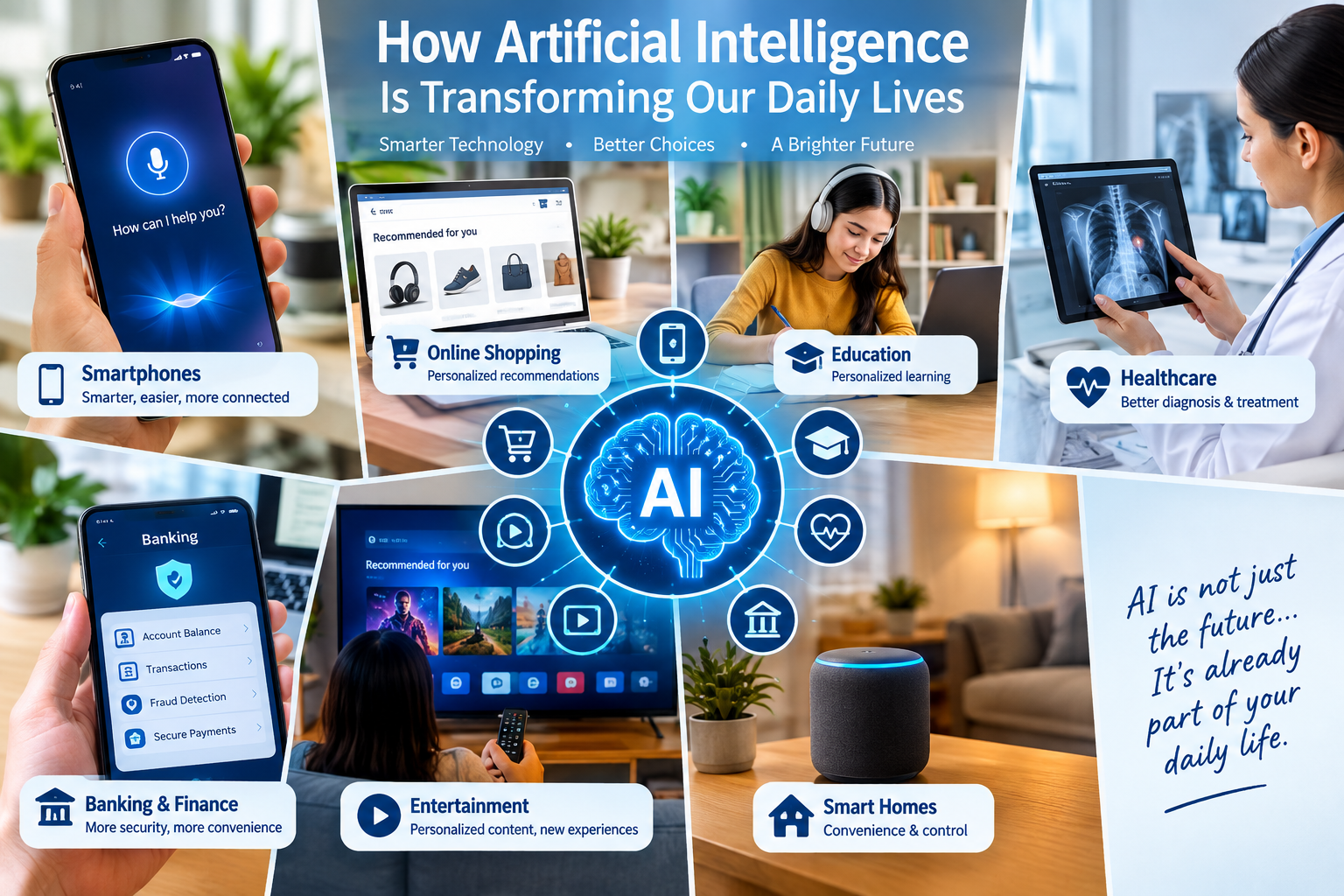
How Artificial Intelligence Is Transforming Our Daily Lives
Artificial Intelligence in Daily Life is changing the way we work, communicate, learn, shop, and entertain ourselves. From smartphones to online recommendations, AI has become an important part of our everyday lives.
Artificial Intelligence (AI) is no longer just a concept from science fiction movies. Today, it has become an important part of our everyday lives. From smartphones and online shopping to education, healthcare, banking, and entertainment, artificial intelligence is changing the way we work, communicate, learn, and make decisions.
Artificial Intelligence in Daily Life
Many people use AI-powered technology every day without even realizing it. Voice assistants, recommendation systems, smart cameras, translation applications, chatbots, and personalized online services are all common examples of AI in action.
How AI Is Changing Everyday Life
As artificial intelligence continues to develop, its role in our daily routines is expected to become even more significant.
What Is Artificial Intelligence?
Artificial Intelligence is a technology that enables computers and software to perform tasks that normally require human intelligence. These tasks can include understanding language, recognizing images, analyzing information, identifying patterns, and making predictions.
Traditional computer programs generally follow predefined instructions. AI systems, however, can analyze large amounts of data and identify patterns that may be difficult for humans to process manually.
Some modern AI systems can also generate text, images, audio, and other types of digital content.
One of the important technologies behind AI is machine learning. Machine learning allows computer systems to learn patterns from data and improve their performance as they process more information.
AI in Smartphones
Smartphones are among the most common examples of artificial intelligence in daily life. Modern smartphones use AI for many different features, including facial recognition, camera improvements, voice typing, translation, and personalized recommendations.
For example, smartphone cameras can recognize different scenes and automatically adjust settings such as brightness, focus, and exposure. AI can also help organize photographs by identifying people, objects, and locations.
Voice assistants are another familiar example. Users can ask questions, set reminders, search for information, send messages, and perform other tasks using voice commands.
Artificial Intelligence in Online Shopping
AI has also transformed the online shopping experience. E-commerce platforms use artificial intelligence to understand customer behavior and provide personalized product recommendations.
For example, when you search for or purchase a particular product, an online store may recommend similar or related products. These recommendations are often based on previous searches, purchases, browsing activity, and other patterns.
AI can also help businesses manage inventory, detect unusual transactions, improve customer service, and provide automated support through chatbots.
AI in Education
Education is another area where artificial intelligence is becoming increasingly useful. AI-powered learning platforms can provide personalized educational experiences based on a student’s needs and learning progress.
Students can use AI tools to explain difficult topics, practice languages, generate study questions, summarize information, and organize their learning activities.
Teachers and educational institutions can also use AI to automate certain administrative tasks and analyze learning data.
However, AI should be used as a supporting tool rather than a replacement for critical thinking, creativity, and human guidance.
AI in Healthcare
Artificial intelligence is also being used in healthcare. AI systems can help analyze medical images, organize patient information, identify patterns in health data, and support certain research activities.
For example, AI-assisted systems may help healthcare professionals examine medical scans and identify patterns that require further attention.
AI can also support drug research and help researchers analyze large datasets more efficiently.
Although AI can provide valuable assistance, important medical decisions should remain under the supervision of qualified healthcare professionals.
AI in Banking and Finance
Many banking services now rely on artificial intelligence. Banks and financial institutions use AI for fraud detection, customer support, transaction monitoring, and personalized services.
For example, AI systems can identify unusual transaction patterns and flag potentially suspicious activity. Chatbots can also answer common customer questions at any time.
AI-based systems can process large amounts of financial information quickly, helping organizations improve efficiency and security.
AI in Entertainment
Artificial intelligence has changed how people discover and consume entertainment. Streaming platforms use recommendation algorithms to suggest movies, TV shows, songs, and other content based on users’ interests and viewing or listening habits.
AI is also being used in video games, music production, image creation, video editing, and other creative industries.
These technologies can help creators explore new ideas and automate repetitive parts of the creative process.
AI and Smart Homes
Smart home devices are another example of AI in everyday life. Smart speakers, security cameras, thermostats, and other connected devices can use AI to understand commands and respond to user behavior.
For example, a smart home system may learn preferred settings and automate certain tasks. AI-powered security cameras can also analyze movement and send alerts when unusual activity is detected.
These technologies can make homes more convenient while also helping people manage devices more efficiently.
Benefits of Artificial Intelligence in Daily Life
Artificial intelligence offers several potential benefits, including:
– Automating repetitive tasks
– Saving time and improving productivity
– Providing personalized recommendations
– Analyzing large amounts of information quickly
– Supporting education and learning
– Improving customer service
– Helping organizations detect unusual activity
– Making digital services more convenient
The usefulness of AI depends on how responsibly and effectively it is designed and used.
Challenges of Artificial Intelligence
Despite its many benefits, artificial intelligence also raises important concerns. Privacy, data security, misinformation, bias, and the impact of automation on certain jobs are some of the issues being discussed as AI becomes more widespread.
AI systems depend heavily on data. If the data used to develop or operate an AI system is incomplete or biased, the system may produce unreliable results.
For this reason, responsible development, human oversight, transparency, and careful use of personal data are important considerations.
The Future of AI in Everyday Life
Artificial intelligence is likely to become even more integrated into everyday technology. Future AI systems may provide more personalized digital services, improve automation, and help people perform complex tasks more efficiently.
However, the future impact of AI will depend not only on technological progress but also on how individuals, businesses, and governments choose to use and regulate these technologies.
Conclusion
Artificial Intelligence is already transforming many aspects of daily life. From smartphones and online shopping to education, healthcare, banking, entertainment, and smart homes, AI is helping people interact with technology in new ways.
As AI continues to evolve, understanding both its benefits and its limitations will become increasingly important. Used responsibly, artificial intelligence can become a powerful tool for improving productivity, convenience, learning, and innovation.