
 By admin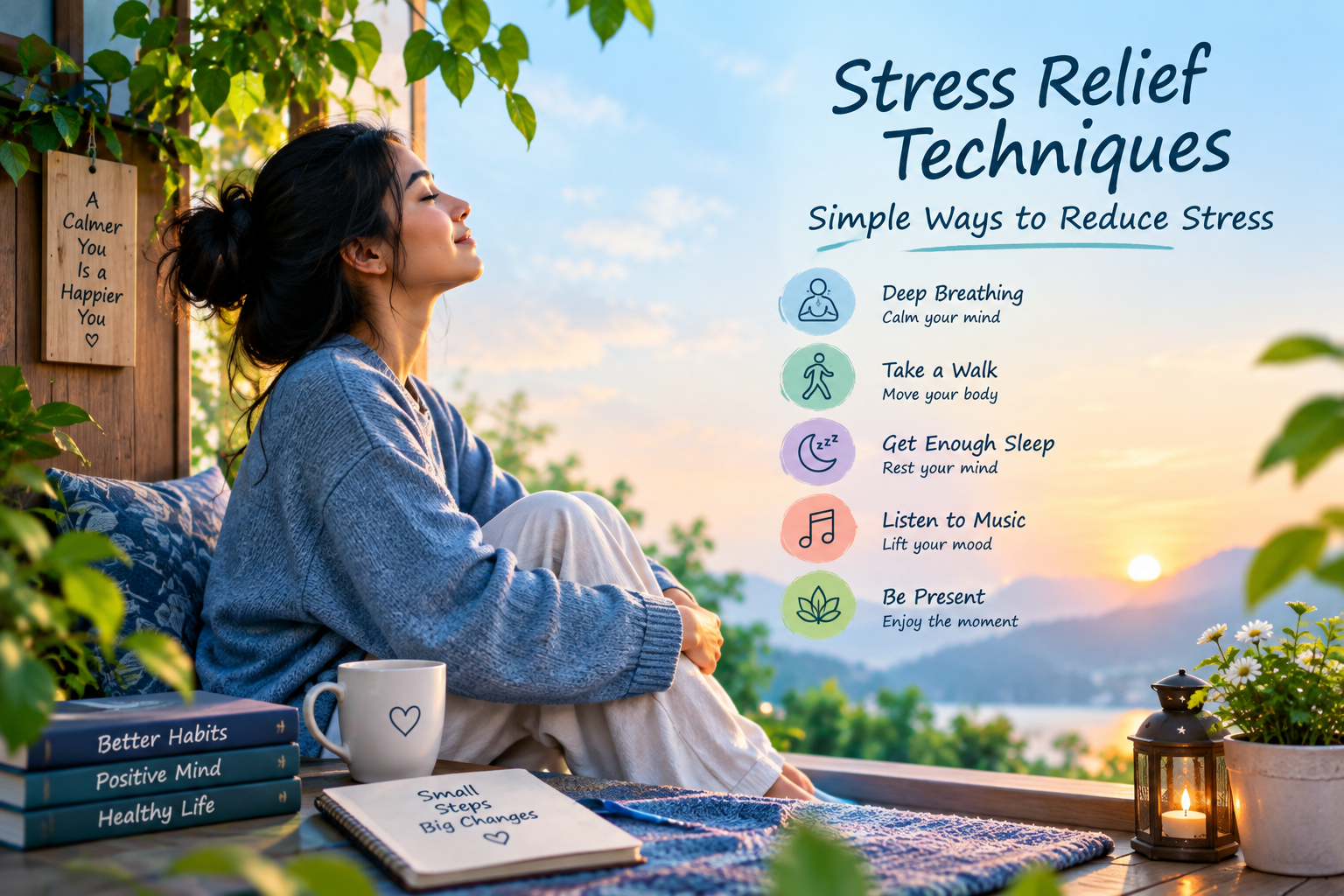
Stress Relief Techniques: Simple Ways to Reduce Stress
Start to use some of the stress relief techniques explained in the materials. Try to use some of the simple relief techniques explained in the materials.
Stress is a common occurrence in life. We often feel overwhelmed because of the demands of life, such as work, studies, family, finances, or a tight schedule. There is stress that simply cannot be avoided; however, there are some simple methods to minimize your stress level and build a more relaxed life.
Sometimes, the answer to less stress is as simple as a solution. Breathing, physical activity, sleep, and engaging in pleasurable activities are simple things that can help. The following are easy and effective stress-relief strategies.These simple stress relief techniques can be added to your daily routine to create a calmer and more balanced lifestyle.
What Is Stress?
Stress can be considered a normal response to a challenging or demanding situation. Sometimes, one may notice their mood and thoughts changing or feel changes in their body during a period of stress.
Some common signs that you may be stressed are:
1.Nervousness or anxiety
2.Difficulty concentrating
3.Trouble sleeping
4.Muscle tension
5.Feeling tired
6.Mood swings and/or irritability
Most of the time, stress is to be expected, but when it becomes chronic, you might be affected in your daily life. It is, therefore, important to care for yourself with healthy coping skills in response to stressful situations.
1. Stress Relief Techniques: Practice Deep Breathing
An easy exercise for stress is deep breathing; it can be done pretty much anywhere. When you feel tense, try to breathe slowly and deeply.
Let go of the tension in your body and slowly inhale through your nose. Now, slowly exhale. Take a couple more breaths, focusing on the movement of your breath.
A short breathing break can be used as a pause to help you focus and re-enter your activities.
2. Have a Stroll
Regular physical activity is a positive approach to stress management. It is not necessary to overdo it. You may walk around your home, workplace, or neighborhood to get away from negative thoughts.
Choose a walk of 10–20 minutes if time allows. Choose the stairs instead of the elevator, or exercise a little throughout the day.
3. Stress Relief Techniques for Better Sleep
The connection between sleep and stress is close. Sleeping well can make it easier to face everyday stresses, while not sleeping well can make it harder. Sometimes, stress can also make it harder to sleep.
Make your sleeping area a calming place. Create a bedtime routine, make it cozy, and go to bed at the same time. Strive to get enough sleep, but do not routinely stay up late at night.
Your brain can be more lively, attentive, and healthy after a good night’s sleep.
4. Listen to Relaxing Music
Take some time to listen to soothing music.
Listening to music can be enjoyable and can be a mental stress reliever. When feeling stressed, play relaxing music.
Create a quick playlist for when you are feeling stressed out. Soothing instrumental music, soft music, nature sounds, or your favorite music can help create a calm ambiance.
5. Take Part in Outdoor Activities
It may be useful to get some fresh air to interrupt screen time and work and life. It may be in a park, a garden, or simply a few minutes outdoors.
Take note of objects in your surroundings, such as trees, sunlight, fresh air, or birds. A break from your everyday setting can help you feel rejuvenated.
6. Try Gentle Stretching
With stress, the muscles can become tense at times. Gentle stretching can be added to your routine if desired to help relieve tension in the body.
Stretch your neck, shoulders, arms, back, and legs. Be sure to take your time and do not overdo it.
It is okay if you are only stretching for a few minutes. It can help after a long work or study session.
7. Minimize Extraneous Screen Time
For some people, the pressure of being constantly notified, along with the social interaction and information available online, can add to stress. Each minute away from your cellphone or computer is a minute to rest your mind.
Aim to spend less time in front of screens and set aside some time throughout the day when you do not view screens. Instead, try taking a walk, reading, stretching, talking to someone, or simply taking some time to rest.
8. Take Notes
If you are feeling overwhelmed by your thoughts, you may always resort to writing to help you gain a clear idea of what you need to do. Write down on a piece of paper what you are concerned about.
Another helpful approach is to make a quick list of things to do. If you have a large task, try dividing it into smaller ones to make it more approachable.
You do not need to write perfectly. What you have to do is simply jot down your thoughts on paper.
9. Talk to a Trusted Person
Do not carry an overwhelming burden of stress on yourself. Talk to a trusted friend, family member, teacher, or colleague for emotional support.
Discussing your situation with someone can make you feel less stressed and confused. A trustworthy person can also offer an alternative perspective on a difficult situation.
10. Relish Hobbies
It is all well and good to learn a new skill that you enjoy. A positive focus could be any activity or process, such as reading, gardening, drawing, cooking, photography, another hobby, or a craft.
Find some time out of your day for activities you enjoy, even if you are busy and it means spending just a few minutes on them.
11. Practice Mindfulness
Mindfulness means paying attention to what is going on here and now, rather than dwelling on the past and worrying about the future.
Eating, walking, breathing, or sitting quietly are all appropriate choices for practicing mindfulness. Focus on what you can see, hear, feel, and notice around you.
It can be as simple as a few minutes of meditation every day to make it part of your stress-management routine.
12. Avoid Complicating Your Day
When you have too many appointments on your schedule, it can increase your stress even more. If you can, plan your day around the most significant activities.
Make a realistic to-do list and divide bigger tasks into smaller ones. Realize that you cannot do everything right away.
A simple yet structured routine can be useful in helping you cope with daily tasks.
When Do You Need to Seek Help Because You Are Stressed?
Some stress-relieving measures can help reduce stress throughout the day, but not everyone is able to manage stress on their own. If stress is dominating your life for an extended amount of time or is interfering with your ability to sleep, work, and/or study, as well as other activities or relationships, it might be time to contact a professional healthcare provider or mental health professional.
Seeking help is a sensible way to take care of yourself.
Final Thoughts
These stress relief techniques do not require major changes to your daily routine.
Stress is a normal experience, and there are ways to go through it in a healthy manner. Practice healthy coping skills in your everyday life, such as deep breathing, walking, stretching, getting plenty of rest, going outside to spend time in a natural environment, limiting screen time, or talking to someone you trust.
You do not need to make all these changes at once. Choose one or two things you can easily do and gradually build from easy to more challenging habits that fit you. Just a few small changes can make a huge difference in how much you enjoy your day instead of feeling stressed and not having enough time to catch some precious rest and relaxation.
[…] and active lifestyle is to choose healthy foods. Healthy foods give us energy and the necessary nutrients to stay strong, focused and active all day long. Following a healthy diet doesn’t mean […]