
 By admin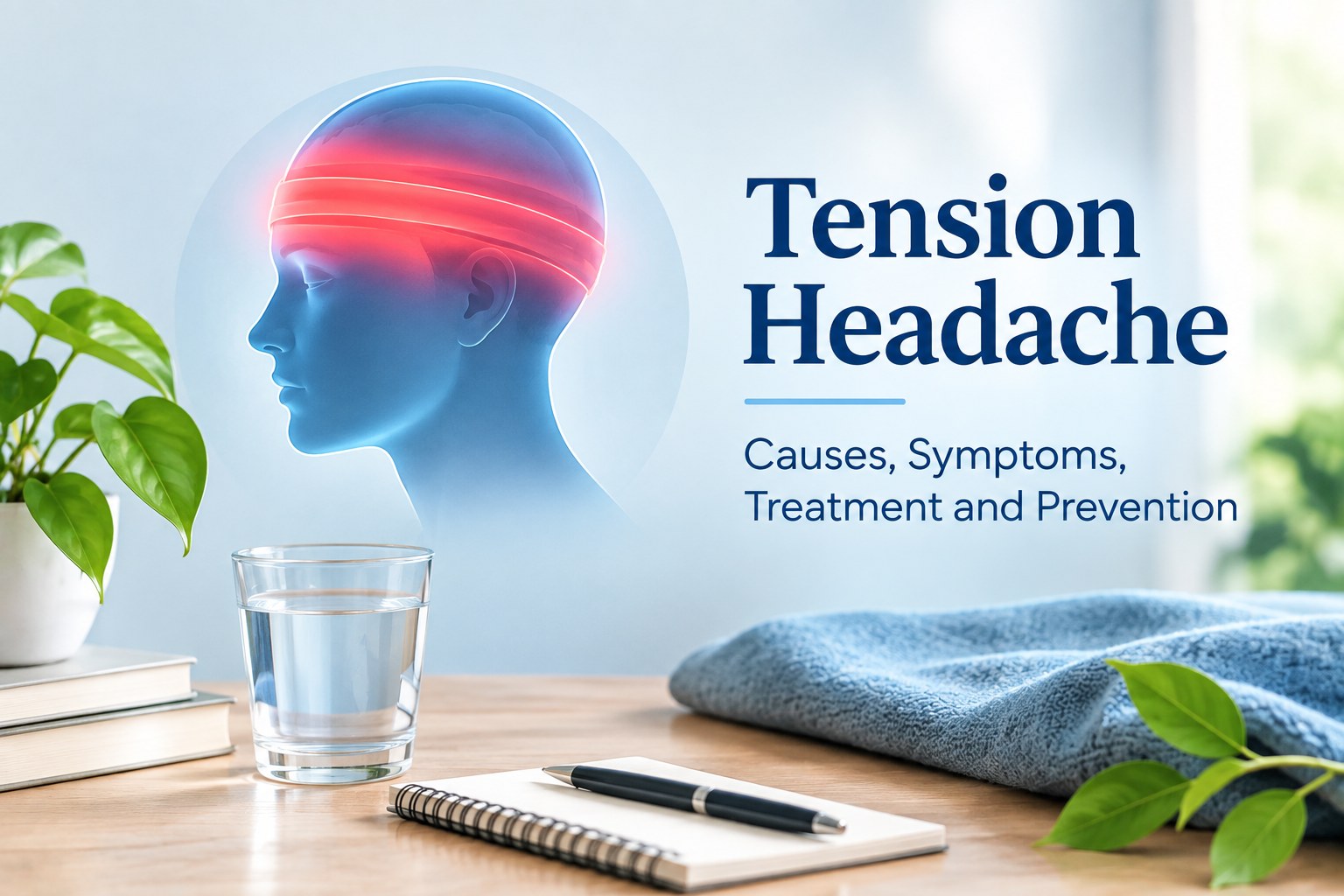
Tension Headache: Causes, symptoms, treatment and prevention.
One of the most common types of headache is the tension headache. This sensation can be like a constant pressure or tightness around your head, temples, or back of your head. A tension headache typically does not produce there in fact depressing throbbing pain like some other headaches. It can interfere with daily functioning, however, and have an impact on concentration, work, sleep and general well-being.
Tension headaches may occur in people of various ages. Some of the things that can cause this type of headache are stress, lack of sleep, poor posture, dehydration, eye strain and muscle tension. Becoming familiar with the causes and symptoms can help you to alleviate any discomfort and minimise the risk of headaches recurring.
What’s the Definition of a Tension Headache?
Tension Headache is a headache that has to do with pressure, tightness, or aching around the head. The pain felt, can feel like a tight band around the forehead or the back of the head.
There may be some individuals that suffer from tension headache symptoms from time to time, and there may be others who will be more prone to them than ever before. Sometimes headaches can be relieved with rest and simple lifestyle changes. If headaches occur often or persist, however, you should consult your health care provider.
The following are some of the common symptoms of tension headache:
Tension headache symptoms will differ from one person to another. Common symptoms include:
1:Low-to-low headache that results in a dull headache.
2:Headaches around temples or forehead
3:Headache and stiffness around the head
4:Softness of the scalp, neck or shoulder
5:Tension in the muscles of the upper back and shoulders;
6:Inability to focus on something due to discomfort
7:Loss of digestive tract lubrication and suffering from diarrhea
The pain is slightly to moderately worse and can be on both sides of the head. For some, the discomfort may be worse in stressful or busy times.
How Tension Headaches happen?
The cause of a tension headache isn’t always predictable. It may be a result of physical and emotional issues.
1. Stress
One common trigger is stress. Stressful factors such as the pressures of work, school, family, finances, and more besides can lead to tension in the muscles of the neck and head.
2. Poor Posture
Prolonged sitting, while head is bent forward, may increase the strain on neck and shoulder muscles. This can add to the tension of your muscles and pain from headaches.
3. Lack of Sleep
If you’re not getting enough restful sleep, you may be more prone to headaches. Your normal body functions may also be disrupted by an irregular sleeping schedule.
4. Eye Strain
If you spend a lot of time in front of a computer, phone, or other screen, this can lead to eye fatigue. Reduce discomfort due to sitting at the computer too long by taking breaks.
5. Dehydration
Dehydration can help to create headache. Thanks to getting sufficient hydration throughout the day, you can maintain basic health.
6. Skipping Meals
Some people may be at a higher risk for headache if they do not eat for extended periods of time. Consuming food regularly and in proper balance can help to sustain energy.
How Long Does A Tension Headache Last?
The length of the tension headache can be different. Sometimes, headaches can last for a few hours; sometimes they don’t. The frequency may also vary from person to person.
If headaches are occurring often or getting increasingly severe or impairing normal functioning it is important to get medical advice. A health care practitioner will be able to help to find out whether the headaches are due to tensions or perhaps otherwise.
How to treat a tension headache.
There are several easy habits you can follow to lessen the pain of a headache.
Get Enough Rest
If you have been engaged in work or studies for long then relax your body. A relaxing, invigorating setting might be beneficial.
Drink Water
Don’t forget to drink plenty of fluids throughout the day. If your headache is related to dehydration, fluids could reduce pain.
Practice Relaxation Techniques
Relaxation techniques, such as deep breathing, meditation, gentle stretching and others can help lower stress and muscle tension.
Improve Your Posture
While seated, keep your back well supported with your head in a comfortable position. When sitting at a desk, position the chair and screen so that you are not constantly bending your neck.
Take Screen Breaks
Take frequent breaks if you use a phone or computer for long periods. Turn away from the monitor and rest your eyes and body.
Try Gentle Massage
Some people find it helpful to massage their temples, neck and shoulders a bit to help relax tense muscles. Don’t over do it, as it can create more pain.
There are several precautions you can take to prevent tension headaches.
For many people, prevention is taking steps to avoid their triggers and adopting healthy lifestyle habits.
Go to the same spot for sleep and make sure to get there at the same time every day.
Aim to get to bed and get up at the same time each day. A regular bedtime schedule can help you to sleep well.
Manage Daily Stress
Not all of the stress in your life has to go away, but there are healthy ways to cope with it. Walking, breathing exercises, meditation, hobbies and screen-free time spent away might be helpful.
Stay Physically Active
Exercise regularly to maintain health—this can possibly help minimize stress. Select activities you like and are suitable to your fitness.
Eat Regular Meals
Try not to miss meals as much as possible. Add nutritious foods that are high in protein, fiber, healthy fats, vitamins and minerals.
Use a Headache Diary.
Making a record of when headaches occur may help identify patterns if they occur often. You can record your sleep, meals and other activities like stress, screen time that might have caused your mood or energy to shift.
When to seek medical advice?
The majority of tension “headaches” are not a medical emergency. If headaches occur often, persist or are unusually severe, however, or go on to disrupt your daily life, get medical help.
If a head injury or headache suddenly becomes very severe or accompanied by weakness, confusion, fainting, trouble talking, trouble seeing or vision changes, fever and stiff neck, or other troubling symptoms, seek urgent medical attention.
You should also contact a health care provider when the pattern of your headaches changes, or when you need to use pain medication often to get relief from the pain.
Final Thoughts
Tension headaches are regular occurrences and they can be related to the daily life pattern including stress, posture, sleep quality, hydration and prolonged screen time. Knowing what causes your pain can make it easier to deal with and avoid it.
Basic practices like getting adequate rest, hydration, proper nutrition, changing positions, screen breaks and relaxation techniques can help. But if a headache occurs regularly or if it’s different than usual it shouldn’t be overlooked. If you feel your symptoms are bothering you, seek the counsel of a competent health care provider for any advice that is individual to you.
Self-care, including managing your sleep, your stress levels, fluid intake, diet, and daily routine, can contribute to your overall health – and potentially to fewer tension headaches in time.